
A roof rarely asks for attention at a convenient time. It might be a small water stain appearing on the bedroom ceiling during a rainy night, a few shingles lying in the yard after strong winds, or an unexpected drip that starts just as you’re getting ready for work. These problems can be frustrating, especially when you’re unsure whether you’re dealing with a minor issue or something more serious.
The truth is that your roof does a lot of work without receiving much appreciation. It protects your home from rain, wind, sunlight, and changing temperatures every single day. Keeping it in good condition isn’t simply about appearance; it’s about protecting the structure underneath and avoiding unnecessary expenses later.
Understanding the difference between routine care, repairs, and replacement can help you make better decisions. You don’t need to become a roofing expert, but knowing a few warning signs can save you time, money, and a fair amount of stress.
Pay Attention to the Early Warning Signs
Roof problems often begin quietly. A loose shingle or a small crack around flashing may not seem urgent, yet either can create an opening for water. Once moisture enters the roofing system, it may travel before becoming visible inside the house.
Start by looking at your roof from the ground. Check for missing or curling shingles, uneven sections, damaged metal flashing, and debris collecting in valleys. After a storm, look for fallen branches or pieces of roofing material around the property. Inside, watch for brown ceiling stains, peeling paint near the upper walls, damp insulation, or a musty smell in the attic.
None of these signs automatically means the entire roof has failed. A stain might come from plumbing, condensation, or another source, while a few damaged shingles may be relatively straightforward to replace. Still, it’s worth investigating rather than hoping the problem disappears.
Avoid climbing onto a steep or wet roof to inspect it yourself. Even experienced homeowners can underestimate the risks involved. A qualified professional can assess difficult areas safely and identify damage that may not be obvious from the ground.
When a Repair Is the Sensible Choice
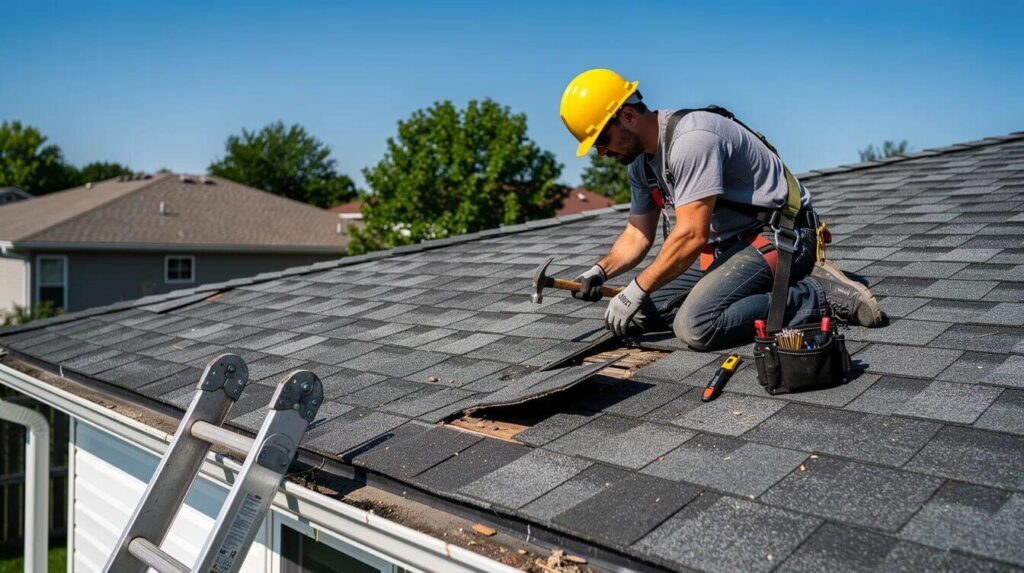
Not every roofing problem calls for a major project. If most of the roof remains in good condition, a targeted roof repair may be enough to restore protection and prevent further damage.
Common repairs include replacing missing shingles, fixing damaged flashing, sealing appropriate joints, and addressing small areas where water is entering. Problems around chimneys, skylights, vents, and roof edges deserve particular attention because these transitions can become vulnerable as sealants and materials age.
The important part is finding the actual source of the problem. Water doesn’t always appear directly beneath the point where it enters. A leak near a bedroom ceiling, for example, could originate several feet away and travel along structural materials before dripping indoors. Covering the visible stain without addressing the entry point won’t solve much.
Ask a contractor to explain what caused the damage and how the proposed repair will address it. A good assessment should distinguish between a temporary measure and a lasting solution. If the roof is otherwise sound, repairing a limited damaged area can be a practical way to extend its service life.
However, repeated repairs in the same location may suggest a deeper issue. Poor installation, deteriorated underlayment, inadequate drainage, or widespread material wear can make individual fixes less effective. Looking at the pattern of problems helps determine what makes financial sense over time.
How to Know When Replacement Is Worth Considering
Every roofing material has a typical service life, but age alone doesn’t tell the whole story. A well-installed roof that receives appropriate care may last longer than one exposed to severe weather or installed incorrectly. Ventilation, attic moisture, workmanship, and local climate all influence how a roofing system performs.
A roof replacement may become the better option when damage is widespread, materials have deteriorated significantly, leaks keep returning, or repair costs are adding up without providing dependable results. Sagging areas or evidence of structural damage require prompt professional evaluation rather than a simple cosmetic fix.
Before agreeing to a replacement, ask for a thorough inspection. The contractor should explain the condition of the existing materials, identify any underlying concerns, and discuss whether partial replacement is feasible. In some situations, replacing one section makes sense. In others, differences in material age and condition mean a complete replacement is more practical.
Choosing a new roof also involves more than picking a color. Consider the material’s durability, weight, weather resistance, maintenance requirements, and compatibility with your home’s structure. Asphalt shingles, metal roofing, tiles, and other systems each have different advantages and limitations.
Ventilation and insulation should be part of the conversation, too. A new exterior covering won’t necessarily solve attic heat or moisture problems if the underlying ventilation issues remain. Addressing the complete roofing system can help protect your investment and improve overall home performance.
Routine Care Can Prevent Costly Surprises
Homeowners sometimes assume that a roof needs attention only after something breaks. In reality, regular roof maintenance can help identify developing problems before they turn into expensive repairs.
A basic maintenance routine includes checking visible roofing materials, keeping gutters and downspouts clear, looking for damaged flashing, and removing debris where it can safely be reached. Overhanging branches should be managed so they don’t scrape against the roof or drop excessive debris onto it.
It’s useful to arrange a professional inspection periodically, especially after severe weather or when the roof is approaching the later part of its expected service life. The appropriate frequency depends on the roofing material, local conditions, and any previous problems.
Be careful with cleaning methods. High-pressure washing can damage certain roofing materials, remove protective granules, or force water into vulnerable areas. Moss and algae also require suitable treatment; aggressive scraping may do more harm than good. Ask a professional which approach is appropriate for your particular roof.
Keep records of inspections and completed work. A folder containing dates, photographs, invoices, and warranty details makes it easier to track changes. It can also help when discussing future repairs with a contractor.
Budgeting for Roofing Work Without Guesswork
Roofing projects can be expensive, so planning ahead is worthwhile. Even if replacement isn’t on the immediate horizon, understanding your roof’s age and condition gives you time to prepare financially.
When requesting estimates, compare the scope of work rather than looking at the final price alone. Check whether the proposal includes removal of old materials, underlayment, flashing, ventilation components, cleanup, disposal, and any necessary permits. A lower quote may exclude important items that later appear as additional charges.
Ask about workmanship warranties and manufacturer warranties, and make sure you understand what each one covers. Keep in mind that warranty conditions can depend on installation practices and ongoing care.
It’s also sensible to set aside funds for unexpected repairs. A roof can look perfectly fine one month and sustain damage during a severe storm the next. Having a reserve makes it easier to respond quickly without putting off necessary work.
Choosing a Contractor You Can Trust
The right contractor should make the process clearer, not more confusing. Look for relevant experience, proper insurance, references, and a detailed written agreement. Ask who will supervise the work, how weather delays will be handled, and what steps will be taken if hidden damage appears after the old materials are removed.
Be cautious of high-pressure sales tactics, particularly after major storms. You should have an opportunity to review the estimate and ask questions before committing, except when immediate temporary protection is necessary to prevent further damage.
A dependable professional will explain the options in straightforward language and help you understand the benefits and limitations of each approach.
Protect Your Home One Decision at a Time
Your roof doesn’t have to be perfect to do its job well, but it does need to be sound, properly maintained, and suited to the conditions it faces. Paying attention to warning signs, arranging timely inspections, and understanding when repairs are no longer enough can make homeownership considerably less stressful.
Start with what you know: check for visible damage, keep drainage paths clear, and investigate leaks promptly. When a problem is beyond your experience, seek a professional assessment instead of guessing.
The best roofing decision isn’t always the biggest or the cheapest one. It’s the choice that addresses the real problem, protects your home, and offers sensible value over the long term. With a little planning and regular attention, you can keep your roof doing what it was designed to do: sheltering the people and things that matter most.


