
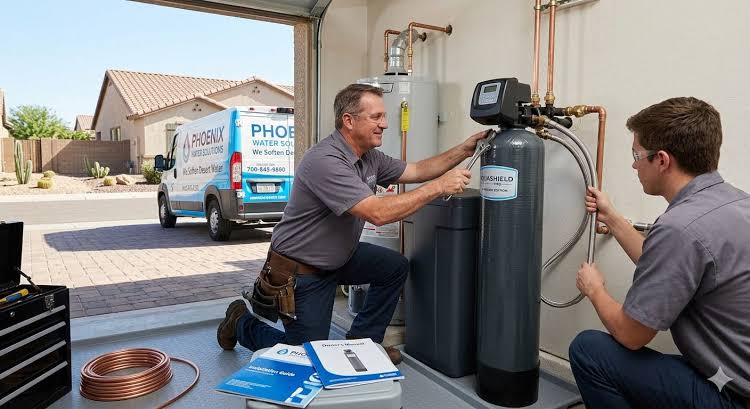
Living in Arizona comes with its own set of challenges, and water quality is one of those things homeowners don’t always think about until it starts affecting everyday life. Between the dry climate, high temperatures, mineral-rich water, and long periods without rainfall, maintaining a comfortable home often requires a little extra attention. Water is used constantly, from making coffee in the morning to showering after a long day, so its quality can have a noticeable impact on daily routines.
Not every water problem is obvious, either. Sometimes it’s the white residue around faucets, soap that doesn’t rinse away easily, or a strange taste that makes drinking water less enjoyable. Other issues may go unnoticed for years. Understanding what’s happening with your water is the first step toward finding a solution that actually makes sense.
Understanding Arizona’s Water Quality Challenges
Arizona homeowners often deal with hard water because groundwater in many areas contains naturally occurring minerals such as calcium and magnesium. These minerals aren’t necessarily harmful to health, but they can create plenty of household inconveniences. Scale buildup around fixtures, cloudy glassware, stiff laundry, and deposits inside water-using appliances are common complaints.
The climate also plays a role in how people use water. During the hotter months, households may rely more heavily on water for bathing, cleaning, outdoor activities, and general comfort. When water contains excessive minerals or unwanted substances, the effects can become more noticeable over time.
That’s why water filtration and treatment solutions for Arizona homes should be selected according to the property’s actual water conditions. A home connected to a municipal supply may have different needs from one that uses a private well. Even neighbours may experience different water quality concerns depending on plumbing, water sources, and existing treatment equipment.
Rather than assuming every household needs the same system, testing the water can help homeowners understand what needs attention and what doesn’t.
Why Whole-Home Water Systems Are Worth Considering
Many people begin their water treatment search with a small filter attached to the kitchen faucet. That’s a reasonable starting point if the main concern is drinking water, but it doesn’t address water flowing through showers, washing machines, bathroom sinks, or other fixtures.
A whole-home system is installed where water enters the property, allowing treatment to take place before the water reaches different parts of the house. Depending on the equipment, these systems can help reduce sediment, chlorine, and other targeted substances.
For homeowners experiencing widespread water quality concerns, whole-home water systems may offer a more convenient approach. Instead of installing separate filters at multiple locations, a single properly designed system can treat water throughout the house.
However, choosing the right equipment is important. Sediment filters, carbon filters, water softeners, and specialty treatment systems perform different functions. Some remove particles, some reduce certain chemicals, and others address hardness minerals. A combination of technologies may be useful in certain homes, but it should be based on water testing rather than guesswork.
Choosing the Right Drinking Water Filtration Options
Even when the water supply is treated, some homeowners prefer additional filtration for drinking and cooking. Taste is often the main reason. Water with a noticeable chlorine smell or an unpleasant aftertaste can make people less likely to drink it regularly.
There are several drinking water filtration options available, and each works differently. Activated carbon filters are commonly used to improve taste and odor while reducing certain chemicals. Reverse osmosis systems can reduce a broader range of dissolved substances, depending on their design and performance. Countertop filters, under-sink units, and refrigerator filters offer different levels of convenience.
The best choice depends on what the water contains and how the household uses it. A family that drinks several gallons of water daily may prefer an under-sink system with a dedicated faucet, while someone living alone might find a smaller countertop unit perfectly adequate.
It’s also worth checking filter replacement requirements before buying. A filtration system is only as useful as its maintenance, and neglected cartridges can affect performance and water flow.
Protecting Appliances From Mineral Buildup
Hard water can quietly affect household equipment. Minerals may accumulate inside water heaters, dishwashers, washing machines, and pipes. Over time, deposits can reduce efficiency, increase maintenance needs, and contribute to premature wear.
Homeowners should pay attention to signs such as scale around faucets, reduced shower flow, or unusual noises coming from water heating equipment. These symptoms don’t always mean a major problem, but they may indicate that the water or equipment needs attention.
Water softeners are commonly used to reduce hardness minerals, while certain conditioning technologies are designed to limit scale formation without removing those minerals. Understanding the difference helps homeowners avoid choosing a system based on misleading expectations.
Maintenance Makes a Real Difference
Installing water treatment equipment is not a one-time task. Filters require replacement, softeners need periodic attention, and some systems benefit from professional inspections. Keeping track of maintenance schedules can help prevent unexpected performance issues.
A simple routine works well for most households. Check filter dates, inspect visible connections, watch for leaks, and pay attention to changes in water taste or pressure. If something seems unusual, having it checked sooner can save time and money later.
Making Everyday Water Better
Good water quality isn’t about installing the most expensive equipment or trying to remove every naturally occurring mineral. It’s about understanding your household needs and choosing a solution that improves everyday life.
For Arizona homeowners, where hard water and environmental conditions can create additional challenges, a thoughtful approach to filtration and treatment can help protect appliances, improve water taste, and make routine household tasks easier.
Start with testing, ask questions, and choose equipment that serves a clear purpose. When water quality is properly understood, the decisions become simpler, and the benefits can be felt throughout the home for years to come.