Curtains are more than just window dressings; they play a crucial role in enhancing the aesthetics of your home, controlling light, ensuring privacy, and even improving energy efficiency. Choosing the perfect curtains for your home involves a blend of style, function, and practicality. Whether you’re redecorating an entire house or just refreshing a single room, this guide will help you make the right decisions to achieve the look and feel you desire.
1. Consider the Purpose of the Curtains
Before diving into colors, fabrics, and styles, it’s important to first consider the primary purpose of the curtains in each room. Curtains serve various functions, and understanding what you need will guide your selection process.
Common Purposes:
- Privacy: In bedrooms and bathrooms, privacy is often the primary concern. Thick, opaque curtains can prevent outsiders from seeing in while still adding style to the room.
- Light Control: In living rooms, home offices, or media rooms, controlling the amount of natural light is crucial. Blackout curtains can block light entirely, while lighter fabrics can diffuse sunlight without darkening the room too much.
- Insulation: Curtains can also help with energy efficiency by providing insulation. Thermal curtains are designed to keep heat in during the winter and block it out during the summer.
- Aesthetic Appeal: Sometimes, curtains are primarily chosen for their decorative value. In this case, you’ll want to focus on design, color, and how they complement the rest of your decor.
Tip:
Determine the primary function for each room before choosing curtains. For example, you might opt for blackout curtains in the bedroom for better sleep but choose sheer curtains in the living room to allow natural light while maintaining a light and airy feel.
2. Choose the Right Fabric
The fabric of the curtains not only affects how they look but also how they function. The material you choose will influence the curtains’ durability, light control, and ease of maintenance.
Popular Fabric Options:
- Cotton: Cotton is a versatile and popular choice for curtains. It’s easy to clean, durable, and works well in both casual and formal settings. Cotton curtains can be lined for additional insulation and light control or left unlined for a breezier, more casual look.
- Linen: Linen curtains have a natural, textured look that adds an element of sophistication to any room. They allow natural light to filter through while offering a moderate level of privacy. Linen is perfect for a relaxed, airy feel, though it tends to wrinkle more easily than other fabrics.
- Silk: Silk curtains are luxurious and elegant, ideal for formal living rooms or bedrooms. However, silk is delicate and can fade in direct sunlight, so it’s often best used in low-light areas or paired with a protective lining.
- Velvet: Velvet is a heavy, rich fabric that provides excellent insulation and light control. It’s perfect for creating a cozy, warm atmosphere in bedrooms or living rooms but can feel overwhelming in smaller spaces.
- Polyester: Polyester is a durable, budget-friendly option that’s resistant to wrinkles and shrinking. It’s easy to care for and available in a wide range of colors and patterns, making it a practical choice for most rooms.
Tip:
When selecting fabric, consider the room’s purpose, the amount of sunlight it receives, and how much privacy you need. For example, choose heavier fabrics like velvet or lined cotton for bedrooms and lighter materials like linen or unlined cotton for living areas.
3. Select the Right Color and Pattern
The color and pattern of your curtains can make a significant impact on the room’s overall look and feel. Curtains can either blend seamlessly with your decor or serve as a focal point, depending on your choice.
Choosing Colors:
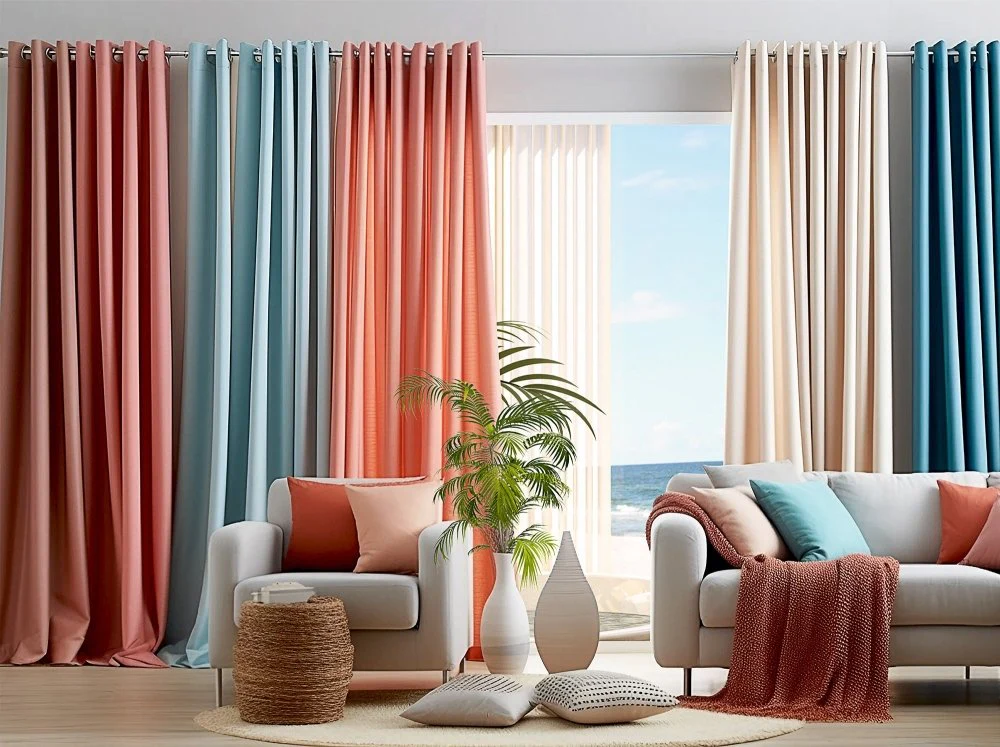
- Neutral Tones: Neutral-colored curtains, such as white, beige, or gray, offer versatility and can complement almost any decor style. They’re ideal if you want the curtains to blend in rather than stand out.
- Bold Colors: If you want your curtains to make a statement, opt for bold colors that contrast with your walls and furniture. Rich hues like deep blue, emerald green, or burgundy can add depth and drama to a room.
- Matching Wall Colors: For a cohesive look, choose curtains in a color that’s a few shades lighter or darker than your wall color. This creates a harmonious flow and makes the room feel more pulled together.
Choosing Patterns:
- Solid Colors: Solid-colored curtains are timeless and versatile, allowing you to change other elements of your decor without worrying about clashing patterns.
- Stripes: Striped curtains can add height or width to a room, depending on the direction of the stripes. Vertical stripes make ceilings appear higher, while horizontal stripes can make a room feel wider.
- Floral or Geometric Patterns: Floral patterns add a touch of softness and elegance, while geometric patterns offer a modern, dynamic look. Both can serve as a focal point in a room, so choose patterns that complement rather than overwhelm your decor.
Tip:
Consider the room’s existing color palette when choosing curtain colors and patterns. If your room is already filled with patterns, opt for solid curtains to balance the space. Conversely, if your decor is mostly solid, patterned curtains can add visual interest.
4. Determine the Appropriate Length and Width
The length and width of your curtains will affect how they hang and how they contribute to the room’s overall appearance. Curtains that are too short or too narrow can look awkward, while well-proportioned curtains can enhance the room’s design.
Length Options:
- Floor-Length: Floor-length curtains are the most popular choice, as they offer a polished, elegant look. Measure from the curtain rod to the floor, allowing the curtains to just touch the floor or pool slightly for a more dramatic effect.
- Sill-Length: Sill-length curtains end just at the window sill and are ideal for kitchens, bathrooms, or any room where longer curtains might get in the way.
- Apron-Length: Apron-length curtains fall just below the window sill, providing a more casual look that works well in kitchens or informal dining areas.
Width Considerations:
- Standard Width: For a standard, gathered look, the width of your curtains should be about 1.5 to 3 times the width of the window. This allows the curtains to cover the window fully when closed and drape gracefully when open.
- Wide Curtains: If you prefer a fuller look, choose curtains that are two to three times the width of the window. This creates a more luxurious, layered appearance.
Tip:
For a more dramatic effect, hang curtains high above the window frame, close to the ceiling, to make the room appear taller. When in doubt, it’s better to go wider and longer with curtains, as this creates a more elegant and complete look.
5. Consider Lining and Layering
Lining and layering curtains can add functionality and enhance the appearance of your window treatments. Lined curtains offer additional benefits such as better insulation, light control, and durability.
Lining Options:
- Thermal Lining: Thermal lining adds insulation, keeping your home warmer in the winter and cooler in the summer. This is particularly useful in rooms with large windows or in older homes with less efficient windows.
- Blackout Lining: Blackout lining is essential for bedrooms or media rooms where you want to block out all light. It’s also useful for reducing noise from outside.
- Standard Lining: Standard lining adds weight and durability to your curtains, helping them hang better and last longer. It also protects the fabric from fading due to sunlight exposure.
Layering Techniques:
- Sheer and Solid Combination: Layering sheer curtains with solid ones offers both privacy and light control. During the day, you can keep the sheer curtains closed to diffuse sunlight while still enjoying natural light. At night, close the solid curtains for privacy.
- Valances and Cornices: Adding a valance or cornice above your curtains can create a more finished, formal look. These decorative elements also help conceal curtain rods and hardware.
Tip:
When layering curtains, choose complementary fabrics and colors to create a cohesive look. For example, pair light, airy sheers with heavier, darker curtains for a balanced design.
6. Don’t Forget the Hardware
Curtain rods, finials, and other hardware are often overlooked but are essential to the overall look of your window treatments. The right hardware can enhance the style of your curtains and ensure they function smoothly.
Choosing Curtain Rods:
- Material and Finish: Match the material and finish of the curtain rod to your room’s decor. For a modern look, opt for sleek metal rods with a matte finish. For a more traditional space, consider wooden rods with ornate finials.
- Rod Diameter: The diameter of the rod should be proportional to the weight of the curtains. Heavier curtains require thicker rods for proper support.
- Adjustable Length: Choose adjustable rods to ensure a perfect fit, especially if you have windows of varying widths.
Tip:
Make sure to install curtain rods at least four to six inches above the window frame and extend them beyond the window by three to six inches on each side. This allows the curtains to cover the window fully when closed and hang gracefully when open.
Conclusion
Choosing the perfect curtains for your home involves more than just picking a fabric you like. It requires careful consideration of the function, fabric, color, length, and hardware to ensure that your curtains not only look great but also meet your practical needs. Whether you’re aiming for a cozy, private bedroom or a bright, inviting living room, the right curtains can enhance the overall atmosphere and functionality of each space.